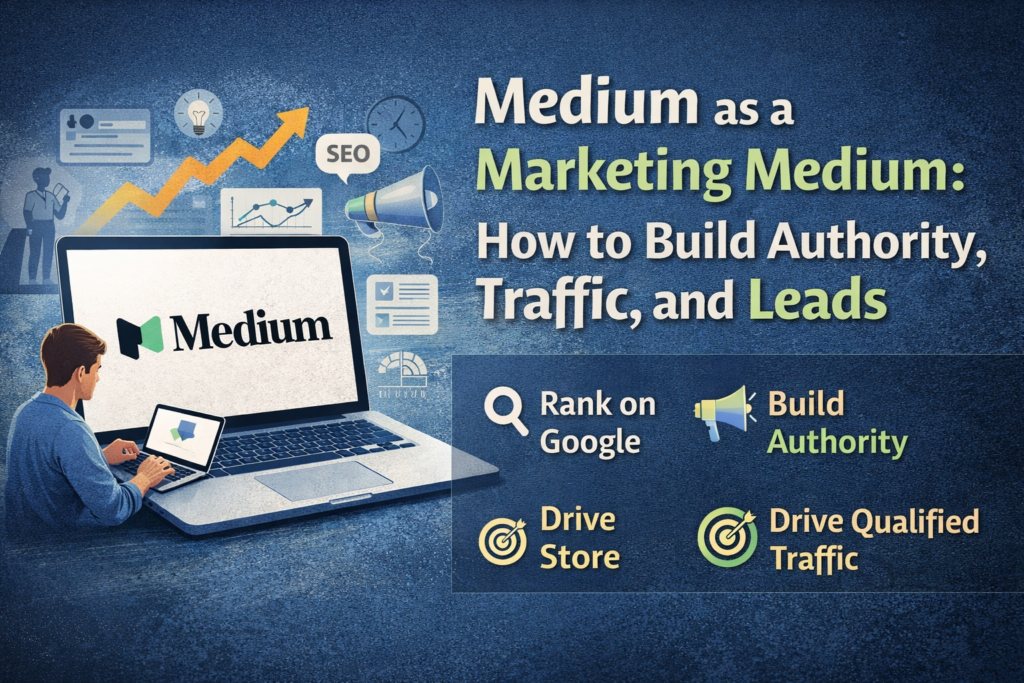
Medium marketing strategy, If you’re serious about content marketing but you’re not using Medium yet, you’re quietly leaving traffic, authority, and leads on the table. Medium isn’t just a blogging site; it’s a discovery engine with its own audience, algorithms, and communities. Used right, it can become one of your most reliable marketing channels—especially if you’re still growing your own website.
In this guide, we’ll walk through exactly how to use Medium as a powerful marketing medium: to build authority, rank on Google, and send qualified traffic back to your brand.
What Makes Medium Such A Powerful Marketing Platform?
Think of Medium marketing strategy as the “YouTube of articles.” You don’t start from zero because the platform already has:
-
Millions of existing readers
-
Topic-based recommendations
-
Built-in social features like claps, highlights, and follows
When you publish on your own website, you fight for every visitor. On Medium, a well‑written post can tap into the platform’s existing audience and get distribution through tags, publications, and recommendations. For small brands, freelancers, coaches, and startups, that’s a huge shortcut.
Marketing Goals Medium Can Help You Achieve
Before you start posting, get clear on what “success” looks like. Medium can support several goals:
-
Brand awareness: Getting your name, story, and expertise in front of new people.
-
Thought leadership: Publishing deep, insightful pieces that position you as an expert.
-
Lead generation: Driving readers to your site, newsletter, or product pages.
-
SEO support: Earning backlinks and building topical authority for your main domain.
When you know which of these matters most, you can shape every article around that outcome.
Who Should Use Medium For Marketing (And Who Shouldn’t)?
Medium works best for people and brands that sell knowledge, expertise, or insight:
-
Consultants, coaches, and freelancers
-
SaaS and software products
-
Agency and service business
-
Educators, creators, and newsletter writer
It’s less useful if you only want quick sales of low-ticket, impulse products. Medium reader prefer story, frameworks, and analysis—not hard sell product pages.
If you can turn what you know into helpful, interesting articles, Medium is a perfect fit.
How Medium Fits Into Your Overall Marketing Strategy
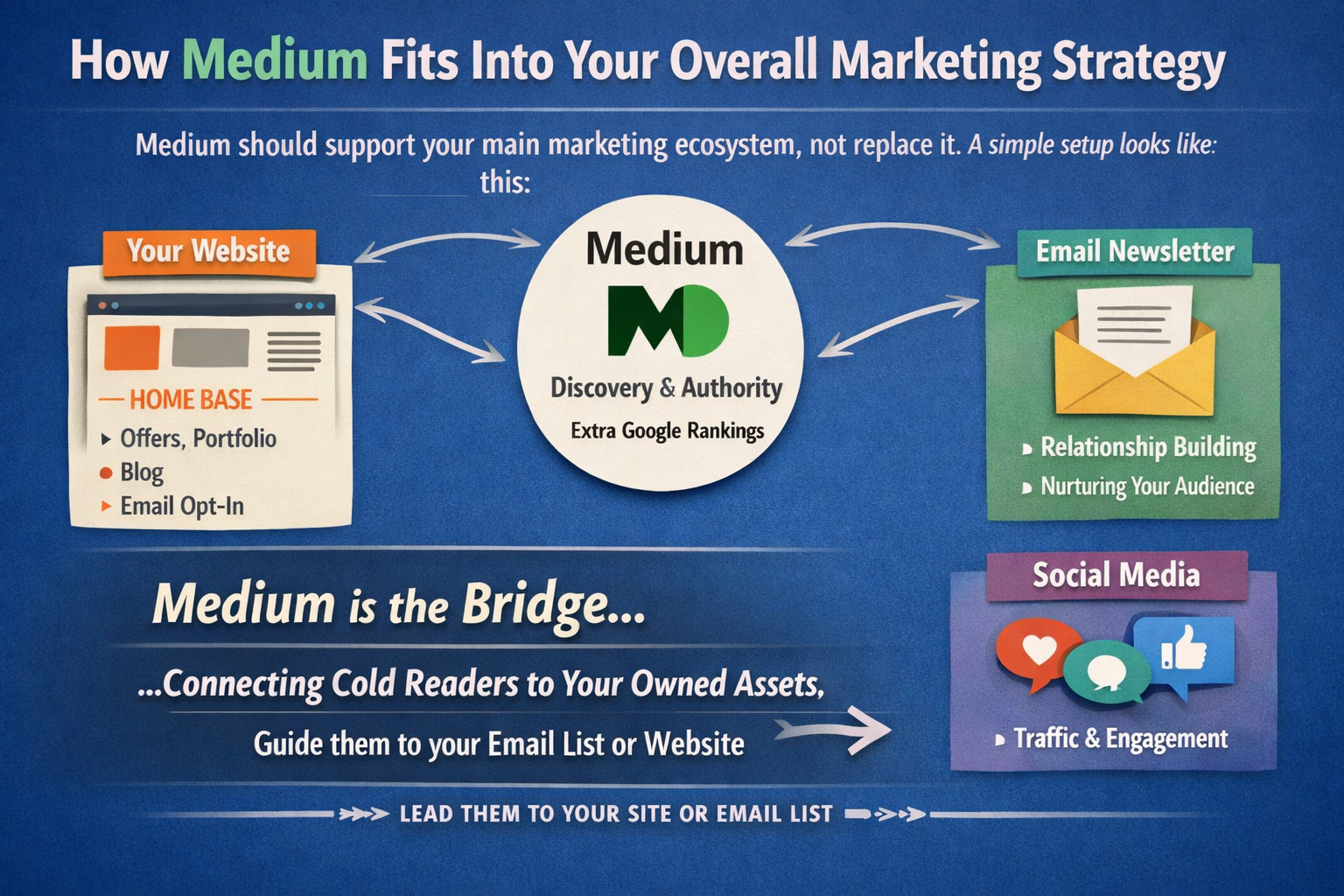
Medium should support your main marketing ecosystem, not replace it. A simple setup looks like this:
-
Your website: Home base (offer, portfolio, product, blog, email opt‑in)
-
Medium: Discovery + authority + additional rankings in Google
-
Email newsletter: Relationship building and nurturing your audience
-
Social media: Short‑form traffic and engagement
Medium becomes the bridge between cold readers and your owned assets. Your job: help people discover you on Medium and then guide them, gently, toward your email list or website.
Choosing The Right Topics: Think Problems, Not Just Keywords
Yes, keywords matter. But on Medium, problems and story matter more. Ask yourself:
-
What problems is my ideal customer Googling in frustration?
-
What big mistakes do people make in my niche?
-
What lessons have I learned that someone 2–3 steps behind me would love?
Build your content around these problem-driven topics and then layer SEO into them. For example:
-
“How To Market Your Small Business On A Tiny Budget (Without Feeling Spammy)”
-
“The 5 Biggest Content Mistakes New Coaches Make (And How To Fix Them)”
-
“What I Learned Spending $5,000 On Ads That Didn’t Convert”
These titles are emotionally relevant, but still contain phrases people actually search for.
Structuring Medium Articles For Readers And Google
To make your Medium posts indexable and rankable, structure them clearly:
-
Use one main keyword or phrase in your headline.
-
Add 2–4 supporting keywords naturally in the first 200–300 words.
-
Break the article into clear H2/H3 sections with descriptive subheadings.
-
Write short paragraphs and mix in bullets to make scanning easy.
-
Summarize key takeaways near the end.
Google loves organized content; readers love clarity. You’re writing for both.
Using Storytelling To Make Your Marketing Articles Stick
Medium is full of “10 tips” posts that nobody remembers. What stands out are stories.
Instead of writing:
“Consistency is important in marketing.”
Tell this:
“I posted every day for 30 days and got nothing. On day 31, one article blew up and doubled my email list. Here’s what changed.”
When you tie practical advice to specific moments, wins, failures, and “aha” realizations, readers see themselves in you—and they trust you more. That trust is what eventually becomes a click, a sign‑up, or a sale.
Strategically Placing Links Without Looking Spammy
Medium readers hate being sold to. But they’re happy to click a relevant, helpful link. Use links like signposts, not billboards.
Good places to link:
-
A brief “Who I am” line in your byline or first section
-
A contextual link when you mention a deeper resource or case study
-
A “Want more?” section at the end with one or two relevant links
For example, if you mention building a content strategy, you might add:
“If you want a step‑by‑step overview of how digital marketing fits together—SEO, content, social, and more—this guide from Websoft Techno is a solid starting point: Digital Marketing 2026: Top Trends for Small and Medium Businesses.”
One high‑authority, relevant link like this strengthens your article’s usefulness and signals to Google that you’re connected to broader, trustworthy content.
Repurposing Your Existing Content Into Medium Articles
You don’t always have to start from scratch. You can:
-
Take a long blog post and turn it into a tighter, narrative Medium article.
-
Turn a podcast episode into a “lessons learned” style post.
-
Convert a webinar or live session into a story + framework article.
Just avoid copy‑pasting the exact same text from your site. Rewrite it with a slightly different angle, new intro, and updated examples so the Medium version stands on its own.
Publishing Consistently And Leveraging Medium Publications
To grow on Medium, two things matter: quality and consistency.
Aim to:
- Publish at least 1–2 solid posts per week.
- Submit your best pieces to relevant Medium publications (marketing, business, startup, creator economy, etc.).
- Engage with comments on your posts and occasionally comment thoughtfully on others.
Publications can dramatically boost your reach because they already have followers. Getting accepted isn’t about perfection; it’s about being clear, relevant, and valuable to their audience.
Tracking What Works (So You Don’t Waste Time)
Medium marketing strategy gives you basic stats:
-
Views
-
Reads and read ratio
Watch for patterns:
-
Which headlines get the most views?
-
Which topics get the highest read ratio?
-
Which posts bring the most clicks to your website or email opt‑in?
Once you see what resonates, do more of it. If you notice that your “case study” posts outperform your “tip list” posts, you have a clear signal from your audience.
Common Mistakes People Make Marketing On Medium
A lot of creators quit Medium early because they fall into one of these traps:
-
Only posting salesy product pitches
-
Never linking back to their own ecosystem
-
Posting once a month and expecting explosive growth
-
Ignoring headlines and writing “diary-style” titles
-
Writing dense, academic text with no story or personality
If you avoid these, you’re already ahead of most people posting on the platform.
Simple Medium Marketing Blueprint You Can Steal
Here’s a straightforward, repeatable process:
-
Pick one clear audience (e.g., early‑stage founders, freelance designers, health coaches).
-
List 20–30 problems, questions, or mistakes that audience deals with.
-
Turn each into a story-driven educational article.
-
Add one or two contextual links back to your best resources or opt‑in.
-
Publish twice a week and submit to relevant publications.
-
Review your stats every month and double down on the best‑performing topics.
Follow this for 3–6 months and Medium stops feeling like “just another platform” and starts behaving like a real marketing channel.
Conclusion
Medium marketing strategy won’t magically fix a weak offer or a confusing brand. But if you have something genuinely useful to share and you’re willing to show up consistently, it can become a powerful medium marketing strategy for you. You get extra search visibility, access to an existing audience, and a place to sharpen your thinking in public.
Instead of trying to game algorithms or churn out soulless “SEO content,” treat every Medium article as a conversation with one ideal reader. Help them, teach them, tell them a story—and give them one simple next step to stay in your world. Do that again and again, and over time Medium will quietly become one of the most valuable assets in your marketing toolkit.